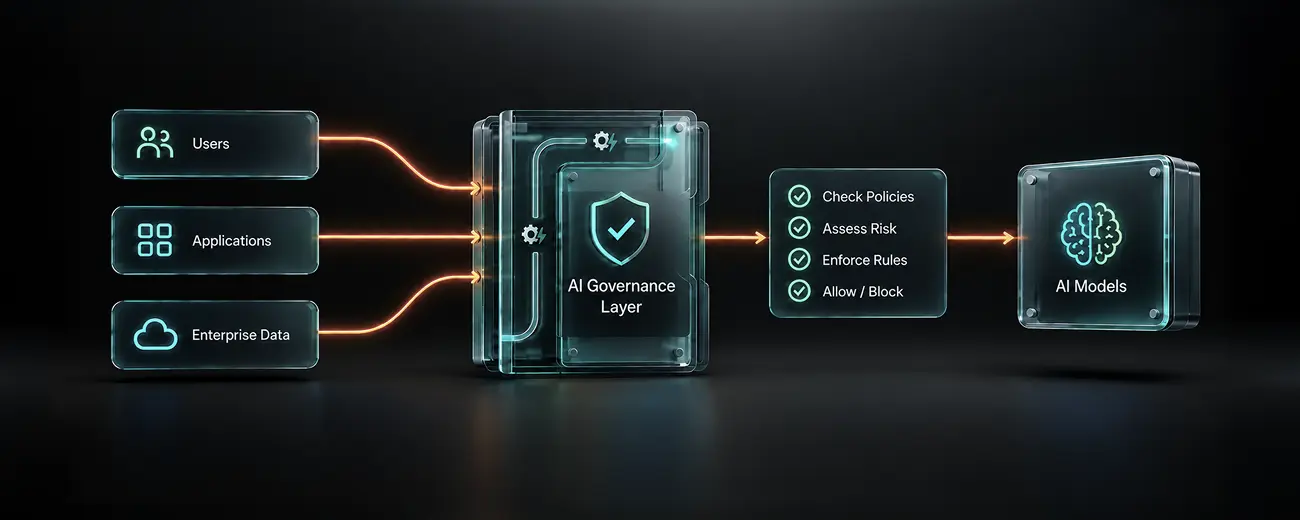

An AI governance layer is a control system inserted between users, applications, and the AI models they interact with, evaluating each interaction against defined policies and returning a decision, allow, adjust, or block, before the activity proceeds. Instead of every application or developer building governance logic independently, it centralizes enforcement into one reusable layer.
Why It Matters
Most organizations' current approach to AI governance is a patchwork: one team writes guardrails into a chatbot's system prompt, another leans on a policy document nobody consistently checks against, and a third has no controls at all because their use case moved faster than any review process. This fragmentation means the same regulatory requirement gets interpreted differently by every team that touches AI, if it's enforced at all. When a regulator asks an organization to demonstrate that a policy is actually enforced, not just written, most cannot produce that evidence, because enforcement was never centralized enough to trace.
How It Relates to AI Governance
A governance layer typically sits outside the model itself, so it stays consistent regardless of which AI provider an application uses underneath. It evaluates activity through a defined sequence, ingesting context, checking for sensitive data, evaluating against policy rules, issuing a decision, and logging the outcome, producing both the real-time control and the audit trail needed afterward. This shifts governance from a manual, after-the-fact review into something enforced at the moment an interaction happens.