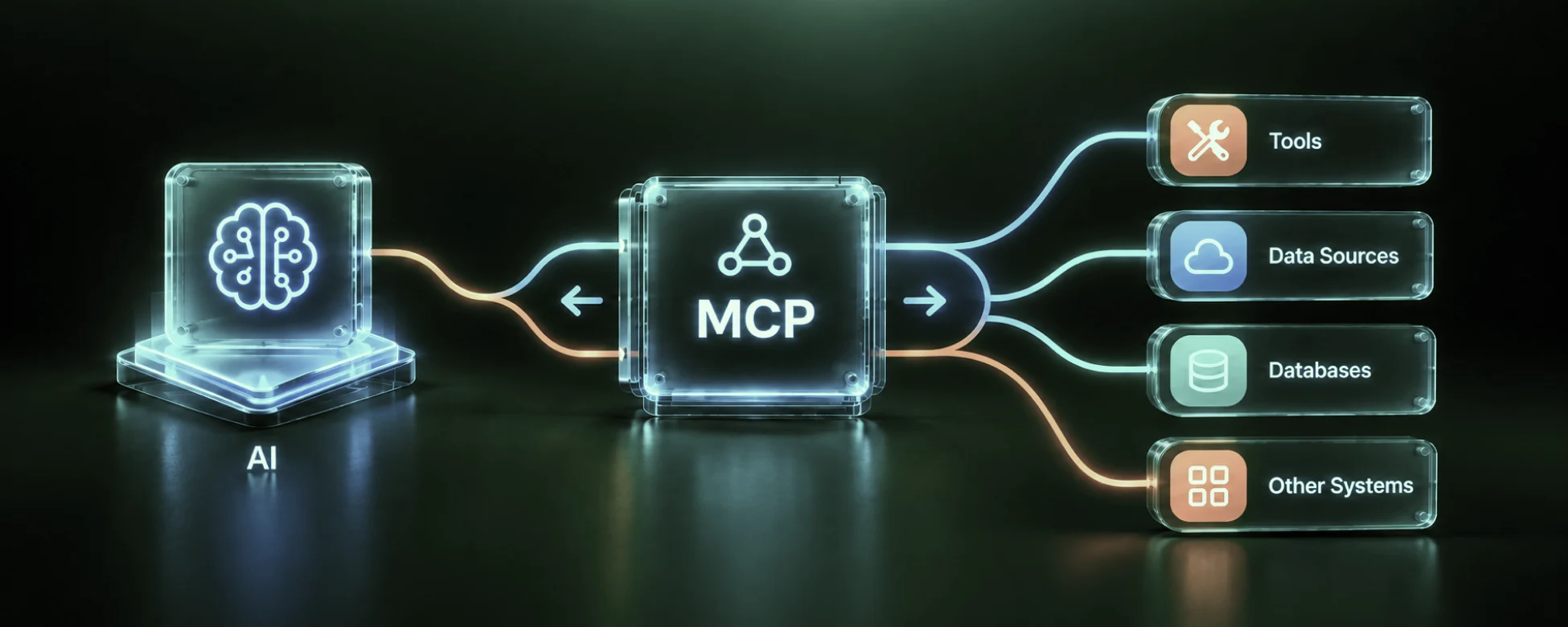

Model Context Protocol (MCP) is a standard that allows AI models and agents to connect to external tools, data sources, and systems in a consistent way, rather than requiring custom integration code for every connection. It's what lets an AI agent, for example, query a database or call an internal API as part of completing a task.
Why It Matters
As AI systems move from answering questions to taking actions, querying systems, calling tools, and executing multi-step tasks, the connections between models and the systems they touch become a new surface for risk. An MCP-connected agent can potentially reach far more of an organization's systems and data than a chatbot ever could, and most existing security and governance tooling wasn't built with this kind of tool-calling behavior in mind. Few organizations working with agentic AI today have real visibility into what an MCP-connected agent is actually doing when it invokes a tool or accesses a data source.
How It Relates to AI Governance
Governing MCP-based interactions means extending the same evaluation logic used for prompts and documents to tool calls and agent actions themselves, checking not just what an agent says, but what it does and what data it touches when it acts. This is emerging as one of the least-covered areas of AI governance, since most current tooling was built around prompt-and-response interactions, not autonomous, multi-step agent behavior.